Most business state safety issues. Less treat it as an everyday technique. The difference appears not in posters or policies, yet in the first 2 mins after somebody breaks down in a conference space, insinuates the warehouse, or has an asthma strike on a client site. Those initial minutes belong to colleagues, not ambulances. Corporate first aid courses close that space, transforming spectators right into very first responders and plans into predictable action.
I have led programs in offices, logistics centers, restaurants, laboratories, and building sites. The pattern holds across markets: where first aid training is routine, occurrence results boost, small injuries stay small, and people speak out earlier regarding risks. Society adjustments when the ability is common.
CPR course near AdelaideWhat first aid training resembles inside a business
A great first aid course passes book situations and asks, what actually occurs here? In a finance firm, the emphasis might lean on cardiac events, fainting, and allergic reactions at provided occasions. In a manufacturing plant, it is extra about lacerations, crush injuries, eye contamination, heat stress, and electrical occurrences. A kitchen needs burns and knife injuries front and facility. One size does not fit any individual very well.
Core material is steady due to the fact that the human body is stable. Individuals discover scene evaluation, risk control, how to call for assistance effectively, and the main survey: responsiveness, airway, breathing, circulation. They exercise CPR training on grown-up manikins, include pediatric components if there are on-site child care or family members days, and find out exactly how to utilize an AED with confidence. They take care of choking, major blood loss, shock, seizures, anaphylaxis, and stroke acknowledgment. The essentials do not take lengthy to explain, yet they take repetition to really feel natural.
Time matters. The majority of companies run a full-day first aid and CPR course for brand-new team, then much shorter refreshers each year or every two years relying on territory. A CPR refresher course that runs 90 to 120 mins can re-anchor good behaviors and right drift. Fifteen minutes of AED technique per session suffices to keep that muscle memory obtainable under anxiety. Organizations that treat refresher courses as non-negotiable maintenance, the way they deal with forklift licenses or confined-space licenses, see far better efficiency when the room gets loud and messy.
Certification issues too. A first aid certificate is worthless if regulatory authorities do not recognize it or if the contact hours are inadequate. Choose a service provider with certified first aid courses tied to current standards from acknowledged bodies. If your teams take a trip, examine reciprocity across states or countries.
The math that persuades hesitant managers
Executives request for numbers, and they are appropriate to do so. Consider three buckets.
First, survival probabilities. Early CPR greater than increases the chance of survival from abrupt heart attack in public setups. When an AED is applied within 3 to 5 mins, survival can improve severalfold compared to later shocks. Offices are not stadiums, but the physiology coincides. Without instant care the brain begins to suffer injury within mins. Every experienced associate narrows that gap.
Second, injury intensity and wasted time. In my experience reviewing event logs for a logistics client, skilled team decreased lost-time injuries by around 15 percent year over year after rolling out shift-based first aid training and CPR courses. It was not magic, mainly much better bleeding control, quick cooling of burns, and faster transfer to suitable care. The near-miss reporting also boosted since experienced people noticed dangers earlier.
Third, insurance coverage and compliance. Some territories call for a minimal proportion of skilled initial aiders to personnel or to floor room. Noncompliance fines differ, but I have seen five-figure penalties for repeat transgressors. Insurance firms prefer recorded training, correct first aid sets, and AEDs on-site with evidence of maintenance. Renewal settlements tend to go smoother when risk managers can point to first aid and CPR training programs with determined coverage.
Add the soft returns: employee confidence, company brand name, and the signal that people issue. Those are tough to price but easy to feel.
Choosing the appropriate training partner without purchasing a logo
A brand name on a certificate helps, however delivery top quality carries the day. I try to find a couple of sensible signals. The best suppliers, whether nationwide clothing like First Aid Pro or regional instructors with deep industry experience, start with a diagnostic, not a sales deck. They ask about your layout, change patterns, previous events, clinical disclosures, website limitations, and language demands. They walk your floor. They adapt web content to the actual risks you carry.
Trainers with actual area time change outcomes. A facilitator that has actually handled a seizure on a factory floor shows placing, personal privacy, and self-respect with dazzling information. Somebody that has treated a chemical eye sprinkle will certainly demand strolling to the eyewash and running it, not just speaking about it. When you speak with trainers, ask for particular tales where training made a difference for a customer. Obscure platitudes are a warning sign.
Practical ratios matter. Ten students per trainer is a pleasant area for hands-on experiment manikins and sensible scenarios. I stay clear of classes above 16 unless they divided stations and bring an aide. Ask the number of AED fitness instructors they bring, the amount of wrapping sets, how they sterilize manikins, and how much time each student jumps on compressions. If they can not address with numbers, keep looking.
Scheduling informs you if they comprehend a labor force. Excellent partners will offer pre-shift sessions, night options, blended components where theory moves online and practice takes place personally, and walk-in CPR courses for tiny groups. They will assist you track that requires a refresher course prior to certificates lapse.
Mapping training to run the risk of, not wishful thinking
Start with certain risks. A corporate workplace with customer meetings, a health club, and a café might evaluate heart occasions and choking in advance of distressing injuries. An information center adds electric risk and restricted aisles. A laboratory includes chemical burns and inhalation direct exposures. A warehouse bothers with orthopedic strains, crush injuries, and warmth exhaustion.
Site walk-throughs form situations. Put an online circumstance in the freight elevator area, at the reception desk, and in a break space. Exercise the 30-second sprint to grab the nearest AED from your First Aid and CPR Course Townsville real closet. Time for how long it requires to obtain from the far corner of the building to the main entryway with a mobility device. The initial run will surprise you. The second will cut minutes.
Policy positioning prevents confusion. If your protection group have to be notified before calling emergency situation services, cook that into the drill with a clear exemption permanently dangers. If you have on-site registered nurses, define when coworkers start CPR and when medical staff take control of. When plans and training disagree, people freeze.
Building coverage without shedding individuals out
You want skilled people within shouting range of any case. That indicates reasoning in layers.
At minimum, each flooring and each workplace with distinctive threats should have at least two trained first aiders on every change. 2 is not redundant, it is useful. One can fetch the package or AED while the other attends to the patient. If you have swing changes, service providers, or peak seasons, broaden the internet. In storage facilities with numerous mezzanines, train for every level.
Spread the skill. Relying on a single "go-to person" is vulnerable. Vacations, turn over, and unwell days occur. Educating 5 percent of staff is an affordable beginning point for low-risk workplaces. Dual that for higher-risk environments. In a telephone call facility with 300 staff across 3 floorings, that might imply 15 to 30 individuals skilled and present, with names and photos uploaded on interior channels.
Keep lineups present. Use an easy tracker straightened with human resources systems to flag refresher courses due in the following 60 days. Individuals alter groups and places. If the educated individual on the third floor moved last quarter, your coverage map is fiction.
What excellent technique seems like on the ground
On a Tuesday mid-day, a colleague plunges throughout a team instruction. Two people relocate at once. One checks responsiveness and shout-breathing, the other points to a called individual, not the area, and claims, "Sam, telephone call emergency solutions, bring the AED from the reception cupboard." Compressors switch every 2 minutes to lower fatigue and keep depth constant. Someone maintains time. Someone opens the lift for the paramedics. No one suggests concerning whether to continue compressions when gasps appear, qualified individuals have actually seen agonal breathing prior to and do not confuse it for recuperation. The AED gets here and is made use of without argument. Paperwork starts as soon as the individual is turned over. Later on, there is a debrief that is practical, not punitive.

That scene does not require heroics. It requires quiet proficiency across a handful of people and a format that supports them: noticeable AEDs, clear signage, a clean path, reaction packages that are stocked and inspected. It also needs repetition. The first time you put an AED pad, you will fumble. The third time, your hands discover the movement without conscious thought.
Equipment, placement, and upkeep that stands up to 3 a.m.
Kits and AEDs do not save any individual on their own. They do aid trained people do much better work.
For sets, match materials to the environment. Offices need high quality handwear covers that fit various hands, injury shears, assorted dressings, triangular plasters, saline for eye rinsing, burn gel pads if heat sources exist, and a pocket mask for rescue breaths if your procedure includes them. Add sugar gel for recognized hypoglycemics only if your clinical administration enables it. Label shelves and areas. When anxiety spikes, labels reduced search time.
For AEDs, select devices with clear voice motivates, pads with adult and pediatric capacity if kids go to, and electrodes with shelf lives that are very easy to track. Location gadgets where foot website traffic is greatest and feedback courses are fastest: function, primary passages, near stairwells in between floors. In big sites, aim for a three-minute round-trip walk at normal speed. Glass-front closets minimize search time. If alarms on closets discourage misuse, fine, yet stay clear of devices that are so loud personnel hesitate to educate with them.
Maintenance should be monotonous and regular. Batteries and pads run out on predictable schedules. Tie checks to existing center rounds. Log each check, and utilize a shared control panel so a missing out on pad turns red and someone is responsible within 1 day. Do the very same for first aid sets. A vacant box with an eco-friendly cross is even worse than nothing, it breeds incorrect confidence.
Legal responsibilities without legalese
Regulations differ. Typical strings consist of a task to give appropriate first aid devices, employees, and centers based on a threat analysis. Some regions define a minimum number of skilled first aiders per staff member count, others per floor or per shift. Lots of call for a document of injuries and therapy, safe storage for any type of medical documents, and clear signs showing first aid provisions.
When you run across borders, standardize to the strictest common measure to maintain operations easy. Train people to the higher criterion and paper to that degree. Keep duplicates of first aid certificates on file, with expiration days surfaced in your knowing administration system. Throughout audits, the absence of paperwork is dealt with the like the lack of training.
Workers with disabilities or details clinical problems deserve thoughtful preparation. Discretion precedes, however sensible lodgings can consist of obtainable emptying chairs, personnel educated on how to assist during a seizure if the individual authorizations, or training security on epinephrine auto-injector usage where permitted. Technique this with regard and lawful guidance.

Why refresher courses are not optional
Skills fade. Compression deepness softens. Rate drifts. Confidence rots faster than memory, and the very first error is doubt. I track efficiency metrics in refresher course sessions: compression depth and rate from feedback manikins, time to AED pad positioning, time to first shock, and communication quality. The difference widens after concerning 12 to 18 months. A brief CPR correspondence course resets the standard.
Refresher content need to be dynamic. If you have had 3 choking cases at provided town halls, spend time on effective abdominal thrusts and back blows, and reveal what to do if the person is expectant or in a mobility device. If you presented brand-new machinery, method entrapment basics and hemorrhaging control. If your structure layout transformed, upgrade AED areas and pierce the brand-new routes.
Culture steps with stories, not slogans
Posters are great. People learn from individuals. When a staff member uses their training to aid a colleague or a visitor, inform the tale with permission and sensitivity. Acknowledge the responders. Do not make them right into martyrs or subject-matter specialists forever, but do note the moment. That acknowledgment takes a trip even more than a conformity memo.
Leaders model top priorities with their schedules. When a vice president endures a first aid and CPR course with their team, participation leaps following quarter. When line supervisors safeguard time for refreshers instead of squeezing them between due dates, personnel notice. When safety and security moments at the start of meetings revolve via genuine micro-lessons, not simply statistics, people stay engaged.
Language matters. Go down the notion of "the safety and security person." Replace it with "our safety and security technique." When everyone believes they can act, even more individuals do.
Handling edge instances without overcomplicating the plan
Not every situation is neat. Below are a few patterns that are entitled to thought before they happen.
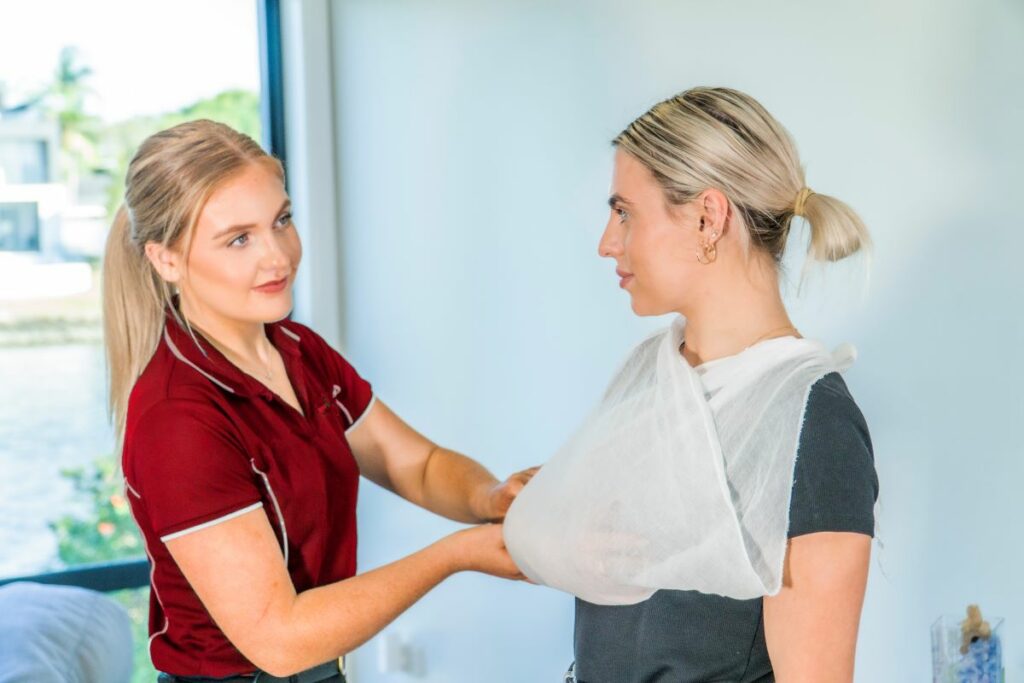
Multiple casualties stretch a small group. Triage essentials issue. In training, perform at least one drill where the initial aider need to determine that requires instant attention and that can wait. Give them approval to phone without asking a manager first.
Remote or only workers change the formula. If individuals travel or function off-site, adjust with portable sets, check-in systems, and training that highlights self-care till assistance gets here. Teach them just how to assist emergency situation solutions to a place with landmarks, not just an address, and how to share what3words or general practitioners coordinates if that is the technique in your region.
Language and accessibility barriers are genuine. In multilingual groups, train multilingual initial aiders and carry easy pictogram guides in packages. In loud environments, hand signals beat screamed guidelines. Technique them.
Panic spreads. Train a spectator role. Someone can manage the crowd, keep area clear, and reroute phones. In three different events I have seen, this function preserved self-respect and gave the very first aider room to work.
A simple, sturdy rollout plan
Here is a streamlined path that blends rate with staying power.
- Run a short, concentrated danger evaluation by location. Map most likely cases, current set and AED placement, and staff distribution by shift. Select a certified partner aligned to your threats. Pilot a first aid and CPR course with one division and action hands-on time, learner self-confidence, and sensible fit. Build a coverage map with called individuals per floor and shift. Publicize exactly how to reach them, and load their call cards in interior directories. Install or reason AEDs and first aid kits to hit a three-minute round-trip goal. Set upkeep tempo tied to existing facility checks. Schedule refresher courses and scenario drills for the year. Track certifications, celebrate actual uses of skills, and song content to occurrence trends.
Beyond compliance: the daily payoff
When individuals practice first aid together, they discover more than compressions and bandaging. They obtain comfortable touching a shoulder and asking, "Are you okay?" They learn to speak clearly throughout tension, to entrust, to switch functions without vanity. These are administration skills camouflaged as emergency situation abilities. Groups that educate this way usually take care of other shocks with even more steadiness.
I maintain a mental journal from the last decade. An assistant who recognized stroke indications within minutes and shortened the timeline to clot-busting treatment. A line worker that quit an arterial bleed with a tourniquet from a package that had been inspected the week prior. A centers manager who ran a debrief that focused on what went right, kept the team undamaged, and boosted the layout within a week. Each story is tiny in the telling and big in the life it altered.
If you are determining where to place next quarter's functional bucks, placed a few of them into first aid training. Buy time with CPR training and an AED that team can find with their eyes closed. Spend for a first aid and CPR course that seems like your work environment, not a common class. Keep the certificates existing. Then, allow the society do the rest. Individuals want to assist. Provide the skill, first aid course near Carrara the tools, and the approval, and they will.